Lice Happens vs. DIY: Why Professional Treatment Wins
Professional Lice Removal Benefits: Why Lice Happens Outperforms DIY Treatments

Dealing with head lice is stressful for families, and choosing between DIY approaches and a professional in-home service often feels overwhelming. This article explains why professional in-home lice removal typically delivers higher eradication rates and greater safety compared with over-the-counter and home remedies, focusing on evidence-based reasons and practical next steps. You will learn how resistance in lice populations, missed nits, and improper application undermine DIY lice treatment, and how trained specialists and manual nit removal reduce reinfestation risk. The piece also compares short-term costs against long-term value, outlines common hidden expenses of DIY attempts, and provides an actionable prevention checklist to stop lice returning. Throughout, keywords such as DIY lice treatment, over-the-counter lice, professional vs DIY lice, non-toxic lice removal, and lice prevention tips are woven into clear guidance to help caregivers decide when a professional service is the smarter choice.
Why Are DIY Lice Treatments Often Ineffective?

DIY lice treatments often fail because they rely on incomplete mechanisms, inconsistent application, and do not address the full infestation lifecycle. Many over-the-counter products depend on pesticides or oils that lice populations have developed partial resistance to, and home remedies frequently miss eggs (nits) attached close to the scalp. The result is repeated cycles of treatment, missed work or school days, and higher reinfestation risk. Understanding these failure modes clarifies why a methodical approach that targets live lice and nits is more effective and time-efficient.
Indeed, a major challenge with many DIY methods is the persistence of nits, which often survive initial treatments and lead to reinfestation.
Nit Survival & Removal Systems for Head Lice
most adult lice, studies indicate that 20-80% of lice eggs (nits) survive treatment, even when most adult lice are killed. A nit removal system incorporating a creme rinse containing formic acid that loosens the bond between the nit and hair shaft can improve efficacy.
Clinical evaluation of an after‐pediculicide nit removal system, 1989
Common causes of DIY and OTC failure include resistance, missed nits, improper timing, and underestimated labor:
Pesticide resistance reduces chemical effectiveness and requires alternative approaches.
Incomplete nit removal leaves viable eggs that hatch and restart infestations.
Incorrect reapplication schedules or diluted product use limit treatment impact.
Underestimating combing and cleaning time prolongs household disruption.
These failure modes point directly to the benefits of targeted manual removal and informed follow-up, which address both live lice and eggs and reduce reinfestation chances.
Different DIY approaches vary widely in mechanism, evidence, and risk, summarized below before exploring professional alternatives.
MethodMechanismEvidence / RisksOTC permethrin/pyrethrinsPesticide neurotoxin on contactModerate evidence; growing resistance and potential skin irritationHome oils (olive, coconut)Suffocation or lubrication for combingLimited clinical evidence; often ineffective at removing nitsManual combing onlyPhysical removal of lice and nitsEffective if thorough and repeated; time-intensive and labor-heavy
This comparison shows that while some DIY methods can work, their effectiveness depends on precise execution and resistance patterns, which many households cannot reliably manage. Knowing the limits of common DIY options motivates a different approach when rapid, reliable clearance is required.
What Causes Over-The-Counter Lice Treatment Failures?
Over-the-counter lice treatments typically use insecticidal compounds whose effectiveness depends on correct dosing and lice susceptibility. Genetic mutations in lice populations reduce sensitivity to common pediculicides, meaning permethrin and pyrethrins can fail even after proper application. Misapplication—such as not retreating at the correct interval, not saturating hair, or not removing nits—further reduces success rates and leads to repeat treatments. Recent resistance trends and real-world misuse explain why many caregivers report multiple OTC attempts before achieving control, increasing frustration and indirect costs.
Research confirms that resistance to common chemical treatments like permethrin is a significant factor in the failure of many over-the-counter lice products.
Widespread Permethrin Resistance in US Head Lice
Permethrin resistance in head lice populations from the US is widespread but is not yet uniform and the level of resistance is relatively low
Determination, mechanism and monitoring of knockdown resistance in permethrin-resistant human head lice,
Pediculus humanus capitis, JM Clark, 2009
The mechanism of resistance plus application errors often results in partial kill, which accelerates reinfestation rather than preventing it. Recognizing this helps caregivers choose a strategy that minimizes repeats and household disruption.
How Do Super Lice Resist Common Home Remedies?
“Super lice” refers to lice populations carrying genetic changes that diminish the effectiveness of chemical pediculicides; these mutations alter target neuron sites or increase metabolic breakdown of toxins. As a result, treatments that once achieved reliable kill rates produce lower efficacy in affected regions. Non-chemical home remedies—like oil applications or household sprays— rarely address eggs firmly attached to hair shafts, and their evidence base is weak. Effective control therefore requires techniques that physically remove eggs and live lice or employ methods designed for resistant populations rather than relying solely on chemistry.
Understanding resistance mechanisms clarifies why manual nit combing or specialized professional protocols often outperform DIY strategies in regions with resistant lice.
What Are the Key Benefits of Professional In-Home Lice Removal?

Professional in-home lice removal focuses on thorough, non-toxic eradication, convenience, education, and reduced reinfestation risk, delivering outcomes many DIY approaches cannot match. Trained specialists combine methodical manual removal with inspection and household guidance, producing higher first-visit clearance and less follow-up work for families. In-home services also limit exposure to pesticides and reduce the logistical burden of transporting children and scheduling clinic visits. These benefits together make professional removal an attractive option when speed, safety, and certainty matter.
Higher effectiveness: Targeted removal reduces the need for repeat cycles.
Safer, non-toxic approach: Avoids chemical exposure for sensitive individuals.
Convenience: Mobile service saves time and preserves family routines.
Education: Specialists teach follow-up checks and prevention steps.
These advantages align with broader public health guidance that emphasizes careful nit removal and informed follow-up to prevent reinfestation.
Benefit Characteristic Example / Value EffectivenessThorough removal of live lice and nits Reported up to 95 percent first-visit success for certain professional processesSafetyChemical-free options reduce exposureSuitable for whole-family scenarios including sensitive childrenConvenienceIn-home mobile serviceSaves travel and scheduling hassles
This table highlights how professional services concentrate multiple advantages—effectiveness, safety, convenience—into a single, reliable intervention that reduces household disruption and downstream costs.
How Does Lice Happens Ensure a 95% First-Visit Success Rate?
Lice Happens employs a structured, non-toxic 6-step manual comb-out process performed by trained specialists to reach reported high first-visit success. The approach centers on systematic detection, meticulous nit and lice removal with specialized nit combs, and education for families on follow-up checks and prevention routines. Quality controls include trained personnel using manual techniques in a mobile, in-home setting to reduce cross-contamination and improve compliance. Those procedural elements, combined with clear guidance for post-visit monitoring, contribute to the company's stated 95 percent first-visit success rate.
This service model emphasizes elimination of both live lice and eggs and pairs treatment with actionable family education to reduce reinfestation risk.
Why Is Chemical-Free, Non-Toxic Treatment Safer for Families?
A chemical-free, manual approach avoids exposing children and household members to pediculicide residues and potential skin or systemic reactions associated with some pesticides. Non-toxic strategies limit the chance of irritation and are appropriate when families prefer conservative exposure profiles, such as with young children or multiple household members. Public health guidance recognizes safety concerns around repeated pesticide exposure, making non-toxic manual removal a reasonable alternative. Choosing a non-chemical method can also simplify follow-up care because it focuses on physical removal and inspection rather than monitoring for chemical side effects.
This emphasis on safety and physical removal aligns with broader recommendations for mechanical, non-toxic approaches to head lice management.
Mechanical, Non-Toxic Head Lice Treatment & No Nit Policy
The No Nit Policy, like Bug Busting, advocates mechanical, non-toxic treatment for head lice management. The National Pediculosis Association markets its own comb called the ‘
Towards the eradication of head lice: literature review and research agenda, T Koch, 2001
Avoiding pesticides supports family safety and aligns with a prevention-oriented view of managing head lice.
How Does the Cost of Professional Treatment Compare to DIY Methods?
Professional treatment often costs more upfront than a single box of OTC product, but it can be more cost-effective long-term by reducing repeat purchases, lost work time, and ongoing household disruption. DIY costs accumulate through multiple treatments, additional combs, and time spent cleaning or caring for excluded children. Factoring in the value of a one-time, high-success visit versus repeated attempts often favors professional removal for families seeking rapid, reliable clearance. Practical service features like flat-rate pricing and acceptance of HSA/FSA payments also make professional costs more predictable for many households.
Consider these three high-level comparisons when weighing options:
Cost: One professional visit may exceed a single OTC product but can be cheaper than multiple OTC cycles.
Time: Professional services save caregiver hours spent combing, re-treating, and managing logistics.
Reinfestation risk: Higher first-visit success reduces downstream expenses and missed work/school.
ApproachAttributeTypical OutcomeProfessional TreatmentFirst-visit effectiveness and convenienceHigher clearance, predictable flat-rate pricing; HSA/FSA often acceptedDIY/OTC KitsLow initial cost per kitLower long-term value if repeated; resistance reduces effectivenessHome RemediesLow direct monetary costFrequently ineffective; time and repeat attempts raise indirect costs
This comparison clarifies that professional removal can be an economically sensible choice once time, indirect costs, and reinfestation risk are accounted for.
What Are the Long-Term Savings of Choosing Professional Lice Removal?
Long-term savings from professional removal appear mainly in avoided repeat product purchases, fewer missed work hours, and less household disruption from recurring infestations. Families who choose a reliable single-visit solution conserve caregiver time and reduce stress, which are meaningful non-monetary savings. For households with ongoing exposure risks—multiple children in schools or daycare—the reduced probability of reinfestation compounds value over time. The predictable outcome of a professional method makes budgeting and planning easier for busy families.
Evaluating savings holistically tends to favor professional approaches when both financial and time costs are considered.
Are There Hidden Costs in DIY Lice Treatments?
DIY approaches can carry several often-overlooked costs that erode apparent savings. Time-intensive combing, repeated product purchases, extra laundry and household cleaning, missed work or childcare shifts, and the potential for medical visits if adverse reactions occur all add up. Emotional toll and stigma-related disruptions also have intangible costs that professionals can help reduce through education and discreet in-home service. Recognizing these hidden expenses helps families make a more informed decision about upfront investment versus long-term value.
Common hidden DIY costs include:
Time spent on repeated combing and monitoring.
Multiple OTC product purchases after failed attempts.
Indirect costs like missed work and childcare rearrangements.
How Can You Prevent Future Lice Infestations After Treatment?
Preventing reinfestation requires routine checks, targeted household actions, and education for families and schools to limit spread and stigma. Regular head checks after known exposures, focusing on visual inspection and combing, catch early infestations before they escalate. Washing or isolating high-contact items for a short period and avoiding extended head-to-head contact in close settings reduce transmission pathways. Clear communication with close contacts and schools ensures quick responses that limit outbreaks and shorten infection chains.
Perform regular checks: Inspect scalps weekly for several weeks after exposure or treatment.
Limit head-to-head contact: Teach children to avoid prolonged head contact during play.
Notify close contacts: Inform family members and close contacts promptly when lice are found.
Follow targeted laundering: Wash recently worn hats, bedding, and cloth items or seal in bags for a few days.
Schedule follow-up inspections: Use short, scheduled comb checks to catch any missed nits early.
These steps reduce reinfestation risk and support faster containment when paired with the thorough removal methods described earlier.
What Expert Tips Does Lice Happens Provide for Lice Prevention?
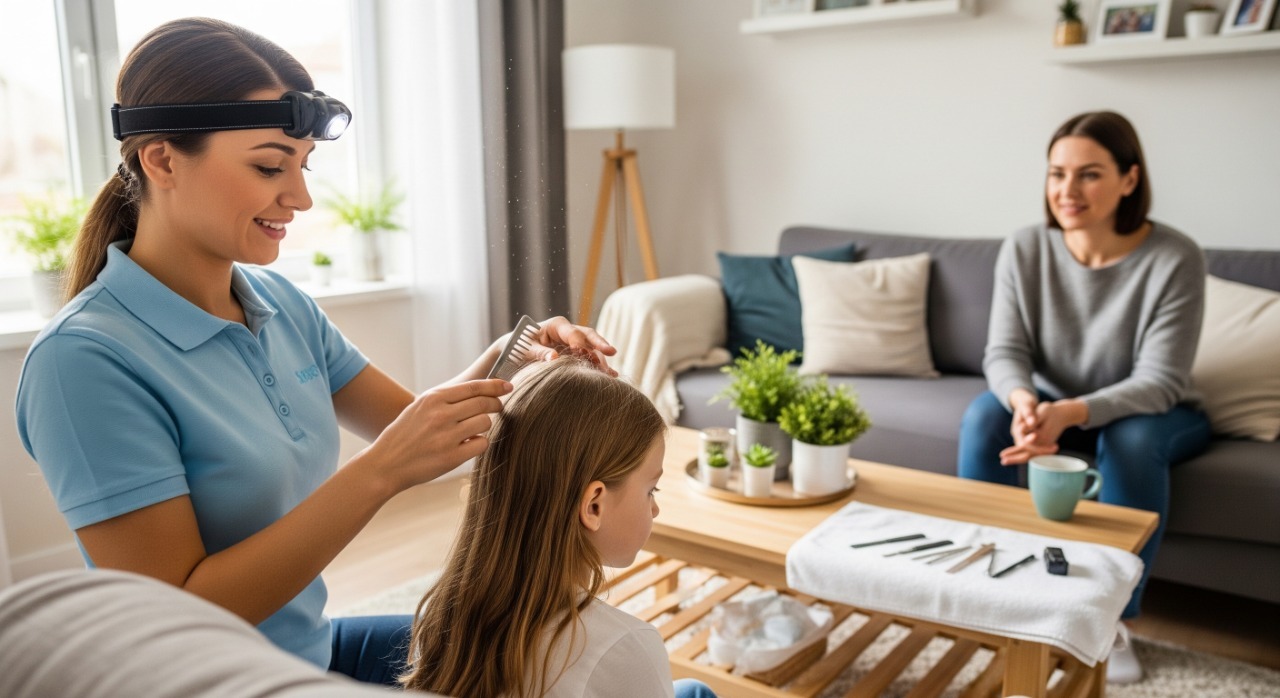
Lice Happens incorporates prevention education into its service model, teaching families practical routines such as regular post-exposure checks, how to perform effective comb inspections, and when to notify close contacts or schools. Specialists emphasize minimal, targeted household actions rather than broad chemical treatments, reducing unnecessary work and exposure. Clients also receive guidance on timing follow-up checks based on the lice life cycle to catch hatching nits before they spread. This educational element helps families maintain low reinfestation risk after a successful removal visit.
Education as part of treatment empowers caregivers to spot problems early and avoid repeating more intensive interventions.
How Does Understanding Lice Biology Help Avoid Reinfestation?
Lice biology—especially the egg incubation period and the mobility of nymphs—directly informs prevention timing and inspection routines. Nits typically hatch in about 7 to 10 days, so follow-up checks are most effective when scheduled around that window to catch newly hatched lice. Recognizing the difference between dandruff and nits, and understanding that lice spread primarily through close head-to-head contact, allows families to focus interventions where they matter most. Applying this biological knowledge reduces unnecessary household treatments and targets efforts to where they will prevent reinfestation.
A biology-informed approach makes prevention actions efficient, evidence-based, and less disruptive than broad, untargeted measures.

Facebook
LinkedIn
Instagram
TikTok