Professional Lice Removal Services in Dekalb County, GA
Professional Lice Removal Services in Dekalb County, GA: Mobile, Non-Toxic, and Guaranteed Solutions

Head lice infestations create immediate stress, lost school days, and household disruption for families in Dekalb County, GA, and many parents want a fast, discreet, and safe solution. This article explains how mobile, non-toxic lice removal works, why in-home services reduce stigma and spread, what costs and value to expect, and how school readmission policies influence treatment and clearance. Readers will learn practical steps for choosing professional lice removal, what a chemical-free manual comb-out entails, and how to prepare for school clearance. Local families should know that RN-founded mobile providers deliver in-home, chemical-free head lice and nit removal with documented success and follow-up guidance to reduce re-infestation. The sections below cover the benefits of mobile care, the stepwise non-toxic process, transparent cost and value comparisons, and school policy navigation so you can act quickly and confidently when lice appears.
Research highlights the significant emotional and social toll head lice can take on affected individuals and their families.
Psychological & Social Impact of Head Lice
The main themes included living in the shadow of fear, torment of infestation, “struggling with head lice, and disturbing ramifications. The sub-themes encompassed social fear, fear of harm, fear of beauty decline, stigma, bullying behavior, self-blame, adversity, challenging struggle, effective coping, nonconforming behavior, family disruption, academic disruption, health threats, and confused mental state.
Exploring the lived experiences of adolescent girls affected by head lice infestation: a qualitative descriptive study, A Khatony, 2024
What Are the Benefits of Mobile Lice Treatment in Dekalb County?

Mobile lice treatment brings professional care into the home to save time, protect privacy, and lower the chance of spreading lice in public settings. Mobile services combine a full head check, targeted manual removal, and family education so treatment addresses the affected child and household behaviors that drive re-infestation. In Dekalb County, mobile visits reduce travel and clinic wait times while enabling technicians to treat multiple family members in one visit, which shortens the window for household transmission. For families who prioritize privacy and convenience, mobile care offers discreet scheduling and a controlled environment, which also makes it easier to follow recommended follow-up combing. Many providers in the Atlanta metro emphasize same-day or rapid appointments to curb outbreaks quickly and professionally.
This list highlights the most direct benefits families see from mobile lice care:
Convenience and time-saving: Professional care comes to your home so you avoid travel and waiting rooms.
Privacy and discretion: In-home treatment reduces exposure and social stigma for children.
Reduced household disruption: Technicians handle the comb-out and education while parents maintain routines.
Rapid appointment availability: Faster access can stop spread and reduce school absences.
These advantages make mobile treatment a practical alternative to conventional clinic visits, and for many families an RN-founded mobile service offers added clinical oversight and follow-up instruction to maximize success.
How Does In-Home Lice Removal Provide Convenience and Privacy?
In-home lice removal limits exposure to public spaces and offers scheduling flexibility around school and work commitments, which reduces missed hours and logistical stress. A technician performing a head check and manual comb-out in the home allows parents to continue normal activities while treatment happens in a private setting. This arrangement also protects children from the embarrassment that can come with clinic-based treatment and supports calmer cooperation from younger kids. The in-home setting provides a natural opportunity for hands-on education with caregivers about preventing re-infestation and executing the recommended combing plan. That education directly supports follow-up care and prepares families to maintain clearance between professional visits.
Why Choose Mobile Services Over Traditional Clinic Visits?
Mobile services avoid clinic traffic and reduce the risk of picking up other illnesses during visits, while providing a comfortable, familiar environment that helps children tolerate thorough comb-outs. Mobile technicians can inspect household members and advise on targeted prevention steps, shortening the overall timeline to clearance. For busy families, removing travel time and coordinating several family members’ needs in a single visit results in better adherence to follow-up combing schedules. Choosing mobile treatment often results in less household disruption compared with repeated DIY attempts, improving overall treatment effectiveness and lowering the odds of retreatment.
How Does Non-Toxic Lice Removal Work for Safe Treatment?

Non-toxic lice removal relies on a detailed manual comb-out process combined with safe preparatory and finishing steps to remove live lice and nits without pesticides. The mechanism is mechanical removal: wet-combing, inspection under bright light, and meticulous nit removal eliminate the life stages that enable reinfestation. Because this approach avoids insecticidal chemicals, it is suitable for children of many ages and for households prioritizing chemical-free options. Professional manual comb-out performed by trained technicians follows repeat inspection and follow-up combing to catch any missed hatchlings, which is critical for a successful, lasting outcome.
Below is a concise breakdown of the manual, chemical-free process used by professional teams:
Head check and assessment: Identify active lice and nits to plan treatment steps.
Soaking and detangling: Prepare hair for efficient combing and limit movement of lice.
Systematic wet-combing: Use fine-tooth lice combs to remove live lice and nits strand by strand.
Microscopic inspection: Verify removal and target missed eggs with focused combing.
Household guidance: Educate caregivers on laundering and environmental steps to reduce re-infestation.
Follow-up combing plan: Schedule and execute a 14-day combing regimen to catch newly hatched lice.
What Is the 6-Step Chemical-Free Lice Removal Process?
This 6-step process maps each treatment step to its purpose and expected outcome to clarify how manual methods achieve results without chemicals. First, a thorough head check defines where to focus the treatment. Then, careful soaking and detangling prepare hair so combs remove lice and nits effectively. Systematic wet-combing captures both mobile lice and eggs, and microscopic inspection confirms removal progress. Household guidance reduces environmental reservoirs, while a structured 14-day combing plan catches any hatchlings and completes elimination. When performed by trained professionals, this sequence reduces retreatment and supports a documented clearance pathway.
Treatment StepPurposeExpected OutcomeHead checkIdentify active infestationTargeted treatment planSoak & detangleEase combing and expose eggsImproved comb efficiencySystematic wet-combingMechanical removal of lice and nitsImmediate reduction in live liceMicroscopic inspectionVerify removal of eggsLower chance of missed nitsHousehold guidanceMinimize re-infestation riskFewer environmental reservoirsFollow-up combing (14 days)Capture hatched liceDurable clearance and guarantee eligibility
This mapping helps families understand why each step matters and how a chemical-free protocol yields effective, safe outcomes.
How Effective Is Non-Toxic Treatment Against Super Lice?
“Super lice” are head lice populations with resistance to common over-the-counter pesticides, making mechanical removal a preferred alternative because it bypasses chemical resistance. Manual comb-out removes lice and nits regardless of their resistance profile, so the physical act of removal is effective even when insecticidal products fail. Professional services report high first-visit success when manual protocols are correctly followed and when families adhere to follow-up combing; for instance, some RN-founded teams document strong first-visit success rates when the 14-day combing plan is executed. That clinical oversight and a structured combing plan improve outcomes against resistant strains and reduce the need for repeat treatments.
What Are the Costs and Value of Professional Lice Removal in Dekalb County?
Professional lice removal typically costs more upfront than a single over-the-counter product, but it often delivers better value through time savings, fewer retreatments, and higher clearance rates. Professional pricing generally covers a head check, technician time for treatment, and travel for mobile visits; transparent providers outline these components so families can compare options. When weighing costs, consider the time parents spend attempting DIY treatments, the expense of repeat OTC purchases, and the hidden costs of lost school or work time. Payment methods and insurance flexibilities vary, so families should confirm whether HSA/FSA reimbursement is available for their plan and retain itemized receipts for claims.
This quick comparison highlights cost and value differences between common approaches:
Professional Service: Higher initial cost, higher first-visit success, less time lost, often comes with a guarantee.
DIY OTC: Lower out-of-pocket product cost, variable effectiveness, potential for multiple repeat attempts.
Other Professional Options: Clinic-based or chemical treatments may have varied success and expose children to pesticides.
OptionTypical ComponentsRelative ValueProfessional ServiceHead check, treatment, travel feeHigh (time saved, higher success)DIY OTCProduct cost, repeat purchasesLow-medium (risk of retreatment)Other ProfessionalClinic visit or chemical treatmentVariable (depends on method)
This comparison shows how professional, non-toxic mobile care can be cost-effective by reducing repeat work and delivering clearer outcomes for families.
How Does Lice Happens’ Pricing Compare to DIY and Competitors?
Transparent pricing that separates a head check, treatment fee, and travel fee helps families understand what they pay for and compare value rather than just dollars. Compared with DIY approaches, professional mobile services reduce the time and emotional burden on families and often lower the overall expense when repeat OTC failures are considered. An RN-founded mobile provider that documents first-visit success rates and offers follow-up guidance adds clinical credibility and helps families assess long-term value. Contacting a local mobile provider for exact pricing is recommended to match services to needs and confirm any documentation useful for reimbursement.
Are HSA and FSA Accepted for Lice Treatment Services?
HSA and FSA plans sometimes cover eligible medical services and may reimburse professional lice treatments if the plan considers them a medical expense; coverage depends on the individual plan’s rules. Families should keep itemized receipts and request documentation that describes the service and medical necessity to support reimbursement claims. When in doubt, check plan guidance and submit documentation promptly; professional providers can often supply the necessary itemized statements to assist reimbursement requests.
How Do Dekalb County School Lice Policies Affect Treatment and Clearance?
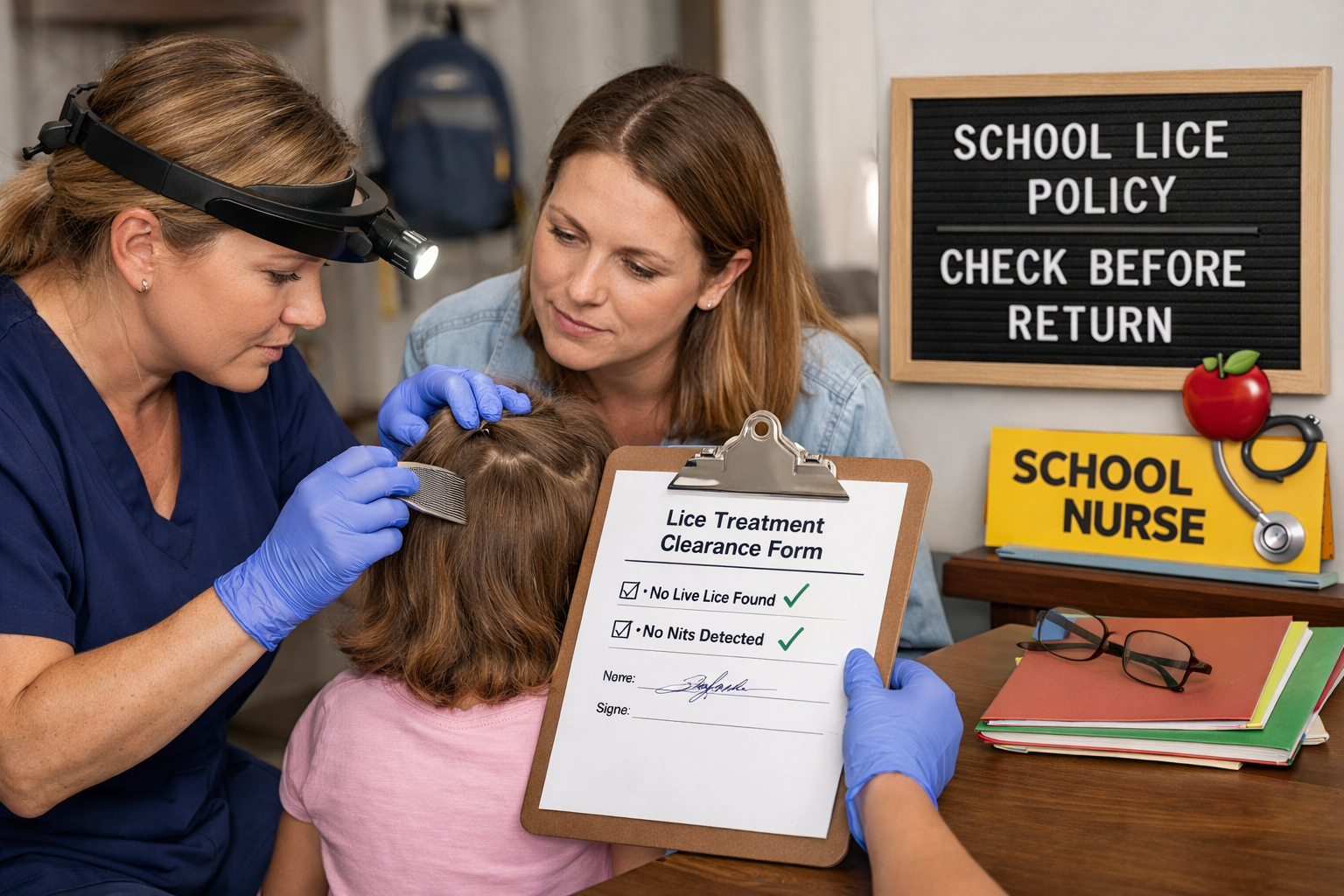
School policies in Dekalb County and surrounding districts vary between no-nit rules and live-lice-only exclusion policies, so parents should contact their child’s school nurse to confirm local readmission criteria before or during treatment. Many schools have readmission protocols that require documentation of treatment or clearance, and some focus on the presence of live lice rather than nits. Knowing the school’s policy helps families prioritize immediate professional treatment when needed and ensures they gather any documentation required for re-entry. Professional providers can assist by inspecting and documenting clearance steps to streamline communication with school health staff.
Indeed, the impact of school policies on a child's time out of school is a critical factor in the overall disruption caused by lice.
School Lice Policies & Lost School Days
approximately 73% of the total variability of the model is attributed to the number of days the student has to be out of school because of the school’s policy.
Head lice treatments and school policies in the US in an era of emerging resistance: a cost-effectiveness analysis, 2009
What Are the No-Nit and Readmission Guidelines in Dekalb Schools?
No-nit policies require the absence of viable eggs for readmission, while live-lice policies permit return once no live lice are present; practices differ by district and school. Parents should contact the school nurse to learn the exact criteria and follow the recommended communication steps, which commonly include informing the school of treatment and providing a clearance note when required. If a school enforces no-nit rules, professional removal that targets both lice and eggs can facilitate quicker readmission and reduce repeated exclusions. Early contact with school health personnel reduces confusion and helps align treatment timing with readmission expectations.
This checklist helps parents prepare documentation and next steps:
Contact the school nurse to confirm readmission rules and required documentation.
Obtain an inspection or clearance note from your provider if requested.
Follow a 14-day combing plan and perform follow-up checks to maintain clearance.
How Does Lice Happens Assist Families with School Clearance?
Providers such as RN-founded mobile teams assist families by performing a documented inspection, offering education on follow-up combing, and providing written guidance that families can present to school nurses. This practical assistance supports the school readmission process and clarifies what families must do during the 14-day combing period to remain compliant with school policies. When combined with the provider’s guarantee conditions tied to following the combing plan, professional documentation and follow-up guidance help families achieve clearance more reliably and communicate effectively with school health staff.

Facebook
LinkedIn
Instagram
TikTok