In-Home Lice Treatment vs. Lice Salons in Atlanta Comparison
In-Home vs. Lice Salon: Which Is Better for Kids?
Want the least stressful lice treatment experience? For many families, in-home treatment offers the best combination of convenience, privacy, and professional results.
With in-home lice treatment, your child can stay comfortable in familiar surroundings while a specialist comes to you. There's no need to drive to an appointment with an active infestation, sit in a waiting area, or juggle multiple children outside the home. It also provides greater discretion, allowing your family to receive care privately without drawing attention to the situation.
Whether treatment takes place at home or in a salon, the most important factor is a thorough process that removes live lice and viable nits. Choosing an experienced provider can reduce the likelihood of repeat treatments and give parents greater peace of mind.
Ready for a more convenient solution? Request a personalized quote to see if in-home lice treatment is the right fit for your family.

Families choosing between in-home lice removal and salon-based treatment must weigh privacy, scheduling, cost, and how the method handles pesticide-resistant lice. This article explains both service models, compares pricing structures and safety profiles, and outlines prevention steps so caregivers can decide which option fits their priorities. You will learn key differences in setting and convenience, what typical costs look like, how non-toxic manual removal compares to device or chemical approaches, and practical steps to prevent re-infestation. The goal is practical guidance that addresses privacy concerns, out-of-pocket cost calculations, and expected outcomes after a single visit. Throughout, we use terms like in-home lice treatment advantages, lice salon cost, manual comb-out lice, and mobile lice removal privacy to keep the comparison searchable and actionable.
What Are the Key Differences Between In-Home Lice Treatment and Lice Salons?
In-home lice treatment brings focused care to the family’s residence, reducing travel and public exposure, while lice salons deliver services in a clinic setting with dedicated equipment and multiple technicians. The in-home model emphasizes convenience and discretion, preserving household routines and limiting social stigma. Salons offer controlled lighting, clinic chairs, and sometimes device-based options that enable simultaneous treatment of several clients. Below is a concise visual comparison of how privacy, convenience, and setting differ between these two approaches.
Setting Type Privacy / Convenience Typical Impact In-home mobile service Unmarked vehicles, private sessions High privacy, minimal disruption Lice salon / clinic Public waiting, multiple clients Lower privacy, efficient throughput Home self-treatment At-home scheduling, variable results Cost-saving but higher repeat risk
This table highlights that in-home care prioritizes discretion and household convenience, while salons emphasize efficiency and clinic resources. The privacy advantage of in-home work often leads families to prefer mobile services for sensitive cases.
How Does Mobile Lice Removal Offer Convenience and Privacy?
Mobile lice removal reduces logistical barriers by bringing trained technicians to a family's home, eliminating travel and waiting room exposure. Appointments can often be scheduled same-day or within 24 hours, which shortens time-to-treatment and helps contain spread within the household. Discreet service features—such as unmarked vehicles and private sessions—help families avoid stigma and maintain confidentiality. These conveniences make mobile care especially useful for families juggling school and work schedules and those prioritizing privacy.
The emphasis on discretion in mobile services directly addresses common concerns about personal privacy when seeking sensitive services.
Privacy Concerns in Service Provision
Obtaining absolute privacy when using mobile apps is impossible because these apps require a certain degree of personal information to provide users with customized
“To our health!”
Perceived benefits offset privacy concerns in using national contact-tracing apps, MT Phung, 2023
What Are the Typical Salon Treatment Settings and Their Limitations?

Salons operate in a clinic-style environment that supports efficient workflows and multiple simultaneous clients, often using specialized devices and several technicians. The public nature of salons can increase social exposure and make discreet scheduling harder for families concerned about stigma. Salon pricing can be per-head or hourly, which may increase costs for larger households compared with flat-rate family pricing used by some in-home services. Understanding these trade-offs helps caregivers choose between clinic efficiency and private, home-centered service.
How Do Costs Compare Between In-Home Lice Removal and Salon Services?
Cost comparison depends on pricing model: flat-rate family fees, per-head charges, or hourly clinic rates, plus add-ons like head checks and travel fees. Flat-rate family pricing can simplify budgeting and reduce total cost for multi-member households, while per-head pricing may be lower for single cases but can accumulate. Hidden fees — such as travel or follow-up charges — affect total outlay and should be clarified before booking. Below is a cost comparison table showing common pricing components and how they typically appear across models.
Pricing Model Common Components Typical Example / Impact Flat-rate family Single fee covers household Reported example: starting from $160 per family Per-head Fee per treated person Reported example: $125–$175 per head Add-on fees Head checks, travel Reported example: head checks $35; travel fee applies
This comparison shows flat-rate options can offer clearer total costs for families, while per-head models may be economical only for one or two people. Always confirm what the price includes to avoid surprise charges.
What Is the Pricing Structure of Mobile Lice Treatment Services?
Mobile pricing often centers on a flat family rate or a per-head fee, with explicit add-ons for head checks and travel. Payment flexibility sometimes includes HSA/FSA acceptance, which can reduce net cost for eligible families. As an industry example, reported figures show flat-rate family pricing beginning around $160, head checks at $35, and per-head treatment fees in the $125–$175 range; a travel fee may apply depending on location. Clear, transparent quotes and a breakdown of included services help families compare value across providers.
How Do Salon Fees and Hidden Charges Affect Overall Cost?
Salons commonly use per-head or hourly pricing that can add up for multiple household members, and they may charge separately for follow-ups or guarantees. Hourly rates increase total cost when technicians need extended time for heavy infestations or multiple children. Warranties and included follow-up checks can mitigate repeat charges, but terms vary by provider. Families should weigh the immediate fee against the likelihood of additional visits when calculating long-term cost-effectiveness.
Why Is Effectiveness and Safety Important in Choosing Lice Treatment?
Effectiveness determines time to lice-free status and the chance of repeat infestations, while safety defines acceptable exposure to chemicals or devices, especially for children. Manual comb-out methods are non-toxic and target both live lice and nits directly, making them resilient against pesticide-resistant "super lice." Device-based approaches and OTC chemical treatments each carry specific trade-offs in speed, comfort, and susceptibility to resistance. The following table compares common treatment approaches on outcomes and safety.
The challenge of achieving complete eradication is underscored by research indicating that some lice and nits can survive initial treatments, especially if resistant to pesticides.
Head Lice Treatment Survival & Pesticide Resistance
a portion of head lice and/ or nits can survive initial treatments. Head louse survival can be significant if pesticide resistant
Head Lice: Identification, Biology, and
Integrated Pest Management, DH Gouge, 2015
Treatment Approach Key Characteristics Outcome / Notes Manual comb-out (non-toxic)Hands-on removal of lice and nits High effectiveness against resistant lice; time-intensive Device-based (AirAllé)Heated air device to dehydrate nits Faster single-session claim; effectiveness varies OTC chemical treatments Pesticide products applied at home Can be ineffective against resistant strains; repeated use common
This comparison indicates manual comb-out avoids pesticide resistance issues but requires trained technicians and time. Device and chemical methods may be faster or more convenient but can face resistance or require repeat treatments.
How Does Non-Toxic, RN-Founded In-Home Treatment Ensure Success?
RN-founded, in-home services combine clinical oversight with structured manual comb-out protocols to improve outcomes and safety. The manual comb-out process typically follows multi-step, pesticide-free techniques that remove lice and nits physically, reducing the chance that resistant lice survive. As a reported industry example, some RN-founded mobile providers cite a 95% first-visit success rate and offer guarantees contingent on following a 14-day combing plan. Acceptance of HSA/FSA payments and clear pricing are additional practical benefits families may encounter with medically informed in-home models.
What Are the Treatment Methods and Guarantees Offered by Salons?
Salons may offer multiple modalities including manual comb-out, device-based treatments like the AirAllé, and chemical options depending on practitioner preference. Device-based methods often advertise single-session convenience, while chemical treatments may require repeat applications and face resistance from "super lice." Guarantee structures in salons vary; some provide follow-up checks or limited warranties that require adherence to provider instructions. When evaluating salons, families should ask about the specific method, expected follow-up, and the conditions of any guarantee.
Historically, many families have relied on commercial chemical treatments, though their effectiveness has evolved over time.
Commercial Pediculicides for Head Lice Treatment
Until recently, head lice have been treated relatively effectively with commercial pediculicides, such as pyrethrins plus piperonyl butoxide, 1% permethrin, 1% lindane, and 0.5%
Home remedies to control head lice: assessment of home remedies to control the human head louse, Pediculus humanus capitis (Anoplura: Pediculidae), 2004
How Can Families Prevent Future Lice Infestations After Treatment?
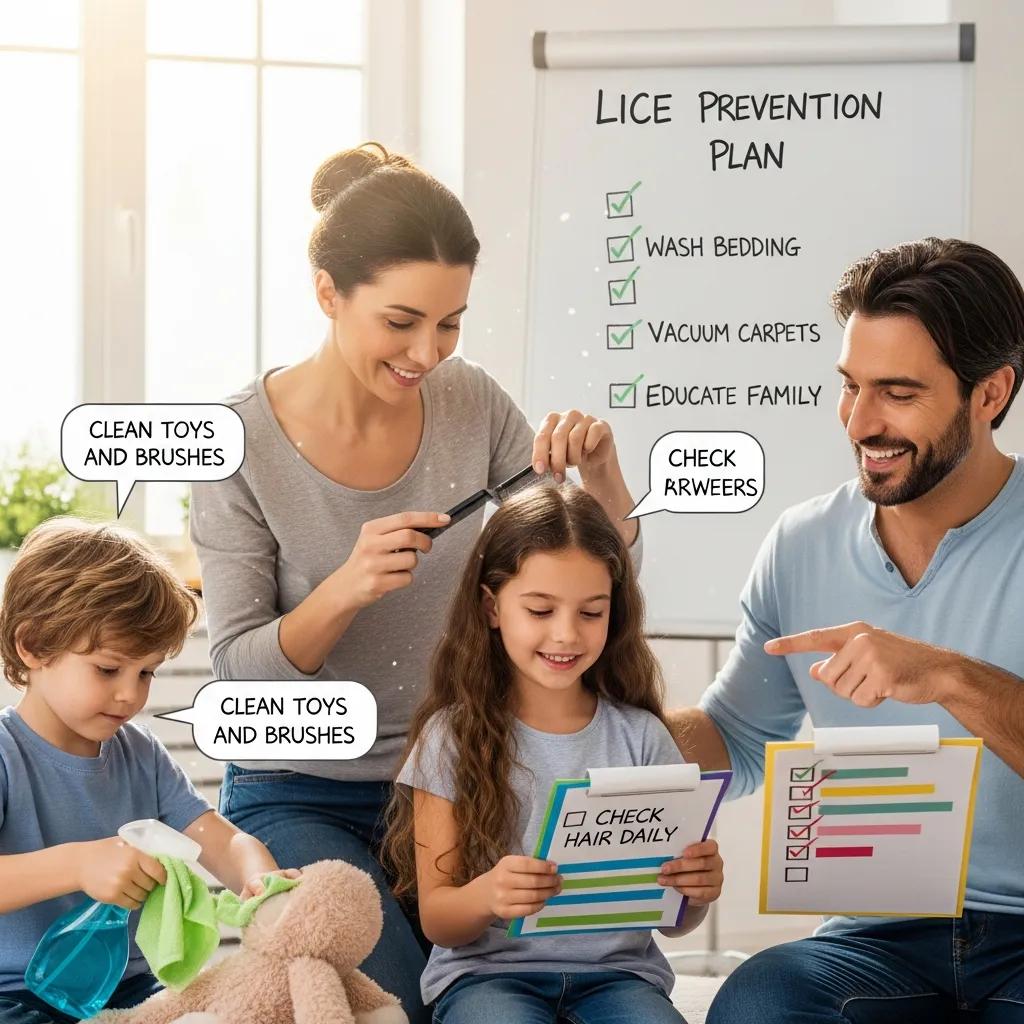
Prevention combines timely combing, household coordination, and environmental measures to reduce re-infestation risk. A clear, actionable checklist helps families turn treatment into durable results and limits transmission among household members and classmates. Below is a short prevention checklist families can use in the two weeks after treatment.
Follow a 14-day combing schedule: Perform systematic wet-combing every 2–3 days to remove missed nits and newly hatched lice.
Coordinate household checks: Inspect and, if needed, treat all close contacts to prevent cycling.
Clean frequently used items: Wash bedding and hats or seal soft toys for 48 hours to remove live lice.
Notify close contacts discreetly: Inform schools or caregivers so they can check and limit spread without stigma.
Applying these steps reduces the chance of relapse and supports any treatment guarantee that requires follow-up care. Consistent household action after treatment is the most reliable way to prevent re-infestation.
What Education and Prevention Support Does In-Home Treatment Provide?
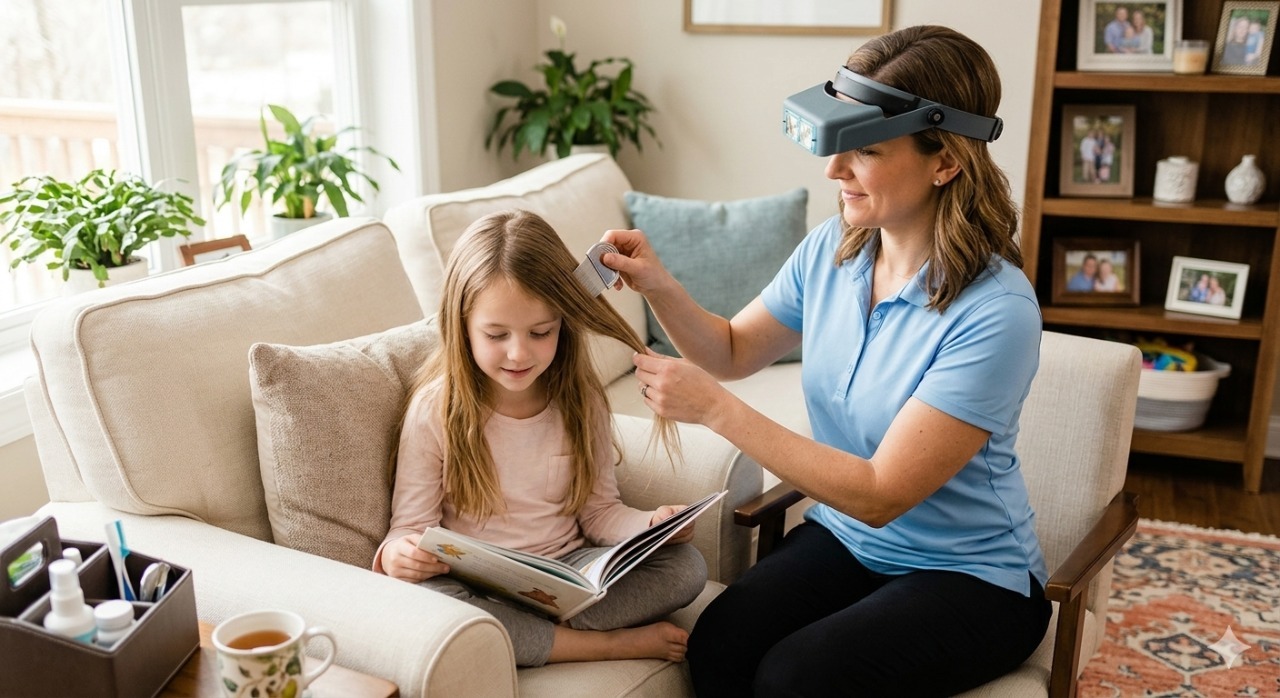
In-home providers often couple hands-on treatment with personalized coaching that shows caregivers how to comb effectively and maintain the 14-day schedule. This in-context education helps parents replicate the technician’s technique and understand what to inspect during follow-ups. Providers may also give tailored advice on household cleaning, notification, and signs that require a repeat check. Personalized, in-home guidance can increase adherence to prevention steps and improve long-term outcomes.
Do Salons Offer Comparable Prevention Guidance?
Prevention guidance in salons varies by provider and may include printed instructions, follow-up checks, or referral to at-home combing resources. Salons can offer structured follow-up appointments, but their ability to demonstrate household-specific techniques is limited by the clinic setting. Families should ask salons about the depth of prevention coaching and any required at-home routines tied to guarantees. Comparing the level of education offered helps families value not just the initial removal, but sustained prevention support.

Facebook
LinkedIn
Instagram
TikTok