Can You Go to School With Lice? Guidance for GA Parents
Can You Go to School With Lice? CDC & Georgia Rules
Can your child go to school with lice? Generally, yes. The CDC says a child with head lice does not need to leave school early. Once treatment has started at home, the child can return to school. However, individual schools may have their own procedures, so parents should check the current policy with their child's school.
In Georgia, there is no statewide law requiring all schools to enforce a no-nit policy. The Georgia Department of Public Health also does not recommend a no-nit policy, but individual school districts may adopt their own return-to-school procedures. That means your child's school may have additional requirements beyond state guidance, so it's important to review your district's policy or contact the school nurse for specific instructions.

Head lice infestations are a common concern among parents and schools, often leading to confusion about the appropriate response. Understanding the CDC guidelines and school policies regarding head lice is crucial for parents, educators, and students alike. This article will clarify the current recommendations from the CDC, explore how Atlanta school districts handle lice policies, and provide insights into effective treatments and prevention strategies. Many parents worry about the stigma and potential exclusion their children may face if they are found to have lice. However, the CDC's guidelines aim to minimize unnecessary absences and promote a supportive environment. We will also discuss when children can return to school after treatment and how to prevent reinfestation.
What Are the Current CDC Head Lice Guidelines for Schools?
The CDC provides specific guidelines for managing head lice in school settings, emphasizing a balanced approach that prioritizes education and prevention over exclusion.
How Does the CDC Recommend Managing Head Lice in School Settings?
The CDC recommends that schools avoid no-nit policies, which means that children should not be sent home or excluded from school due to the presence of nits (lice eggs). Instead, schools are encouraged to educate parents and students about lice, promote regular head checks, and provide resources for treatment. This approach helps to reduce stigma and anxiety associated with lice infestations while ensuring that children can continue their education without unnecessary interruptions.
Why Does the CDC Advise Against No-Nit Policies?
The CDC advises against no-nit policies because they can lead to unnecessary absenteeism and social stigma for affected children. Research indicates that nits are often not viable and do not pose a risk of transmission. By focusing on active infestations rather than the presence of nits, schools can create a more supportive environment for students and families. This policy shift encourages open communication and proactive management of lice, rather than fear and exclusion.
Leading health organizations consistently advocate against no-nit policies, highlighting their ineffectiveness and negative impact on students.
CDC & Health Organizations Oppose No-Nit School Policies
No-nit policies, where students are excluded from school, have been shown to be ineffective in preventing the spread of head lice and contribute to absenteeism by excluding otherwise healthy children from school. The AAP, NASN, CDC, and Harvard School of Public Health do not support no-nit policies.
No-nit policies in schools: time for change, CA Krause-Parello, 2007
How Do Atlanta School Districts Handle Lice Policies?

In Atlanta, school districts have varying policies regarding head lice management, reflecting the CDC's recommendations while also considering local community needs.
What Are the Common Lice Policies Across Atlanta Schools?
Most Atlanta schools follow the CDC guidelines, which means they do not enforce no-nit policies. Instead, they focus on educating parents about lice management and encouraging treatment at home. Schools typically provide resources and information on how to identify and treat lice, ensuring that families have the support they need to address infestations effectively.
While current policies generally align with CDC recommendations, historical data reveals instances where Atlanta schools previously enforced no-nit policies.
Atlanta School Lice Policies & No-Nit Rules
In 1998, the Georgia Division of Public Health and local school health officials examined children for head lice at 2 metropolitan Atlanta elementary schools (kindergarten to fifth grade). These schools had a no-nit policy.
Lice, nits, and school policy, LK Williams, 2001
How Can Parents Verify Specific Lice Rules in Their Child’s School?
Parents can verify specific lice policies by contacting their child's school directly or checking the school's website. Many schools provide detailed information about their lice management policies, including guidelines for treatment and return-to-school procedures. Additionally, parents can reach out to the school nurse for personalized advice and resources.
When Can a Child Return to School After Lice Treatment?
Understanding when a child can return to school after lice treatment is essential for parents navigating this issue.
What Is the Recommended Timeline for School Return Post-Treatment?
The CDC recommends that children can return to school after they have been treated for lice and are free of live lice. Typically, this means that once treatment has been initiated, children can return to school the same day, provided they do not have any active lice. Parents should ensure that they follow the treatment instructions carefully to maximize effectiveness.
How Do No-Nit Policies Affect Return-to-School Decisions?
No-nit policies can complicate return-to-school decisions, as they may require children to be nit-free before returning. However, since the CDC advises against such policies, many schools are moving towards a more lenient approach. Parents should communicate with school officials to clarify any specific requirements and ensure their child can return promptly after treatment.
Despite the lack of scientific evidence supporting their efficacy, some schools continue to enforce no-nit policies, leading to various negative consequences for affected children and families.
The Inefficacy & Impact of No-Nit School Exclusion Policies
Regardless of this fact many schools continue to enforce no nit/lice policies by excluding children perceived to be infected from school. Consequences of such policies include loss of school days, mistreatment, economic burden, and shame. There is no evidence supporting exclusion of students due to the presence of nits or lice. Such policies should be eliminated and school nurses should provide evidence-based
The Efficacy of School Head Lice Policies: A Review of The Literature, 2015
What Are Effective Chemical-Free Head Lice Treatments for Quick School Re-Entry?

When dealing with head lice, parents often seek effective treatments that allow for quick re-entry into school.
How Does In-Home Chemical-Free Lice Removal Work?
In-home chemical-free lice removal services utilize natural methods to eliminate lice and nits without the use of harsh chemicals. These services typically involve thorough combing and the application of natural products that suffocate lice. This approach is not only effective but also minimizes the risk of chemical exposure for children.
Why Choose Professional Lice Treatment Services in Atlanta?
You should choose professional lice treatment services in Atlanta because they have a proven track record, with over 10,000 families trusting them since 2015. They are a BBB Accredited Business with an A+ rating, founded by a Registered Nurse, and boast a 95% first-visit success rate. Additionally, they are licensed and insured, and offer same-day and evening appointments for convenience.
How Can Parents Prevent Lice Reinfestation in School-Aged Children?
Preventing reinfestation is crucial for maintaining a lice-free environment in schools.
What Are Practical Lice Prevention Tips for Students?
Regular Head Checks: Conduct weekly head checks to catch any infestations early.
Avoid Sharing Personal Items: Teach children not to share hats, hairbrushes, or other personal items.
Educate on Lice: Provide information about lice and how they spread to reduce stigma and promote awareness.
How Does Education on Lice Help Reduce Future Outbreaks?
Education plays a vital role in reducing future outbreaks of lice. By informing students and parents about how lice spread and the importance of early detection, schools can foster a proactive approach to lice management. Community awareness campaigns can also help destigmatize lice infestations, encouraging families to seek treatment without fear of judgment.
Why Trust Lice Happens for Your Child’s Lice Treatment Needs?
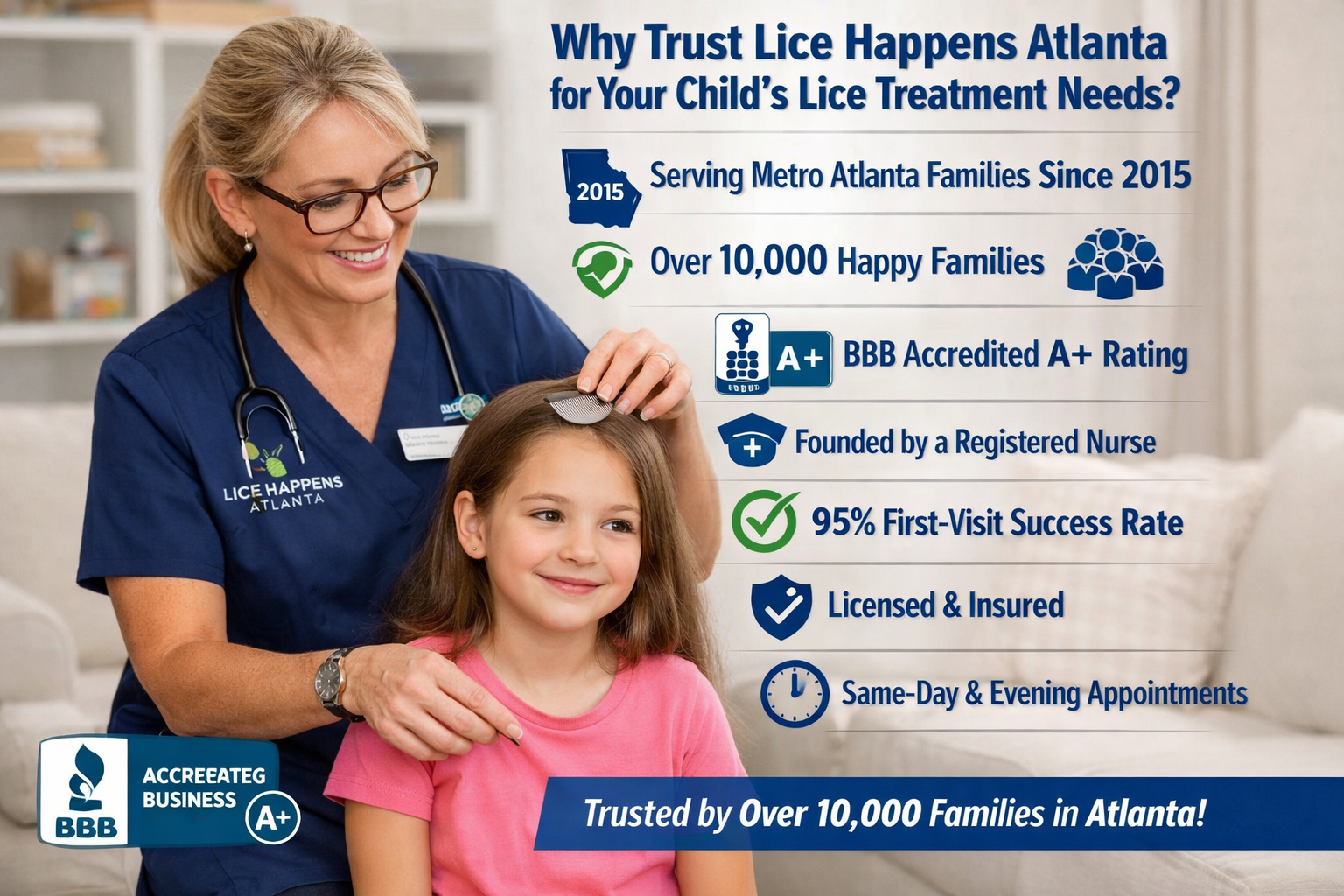
You can trust Lice Happens GA for your child's lice treatment needs because they have served metro Atlanta families since 2015, have over 10,000 families who trust them, are a BBB Accredited Business with an A+ rating, were founded by a Registered Nurse, have a 95% first-visit success rate, and are licensed and insured. They also offer same-day and evening appointments.
What Makes Lice Happens GA Service Unique and Effective?
They have been serving metro Atlanta families since 2015.
Over 10,000 families trust their services.
They are a BBB Accredited Business with an A+ Rating.
The service was founded by a Registered Nurse, ensuring professional expertise.
They boast a 95% first-visit success rate.
They are licensed and insured.
They offer same-day and evening appointments for convenience.
How Does Lice Happens GA Support Families Through Treatment and Prevention?
Lice Happens GA supports families through treatment and prevention by providing mobile lice treatment services, which are available for same-day and evening appointments. They have a high success rate of 95% on the first visit and have served over 10,000 families since 2015. The service is founded by a registered nurse, ensuring professional care. Additionally, they offer resources such as FAQs and blogs to educate families on lice prevention.
Treatment Method Description Effectiveness Chemical-Free Removal Uses natural products to eliminate lice High Professional Services In-home treatment by trained specialists Very High Home Remedies Various DIY methods to treat lice Variable
Lice management in schools is a critical issue that requires understanding and cooperation among parents, educators, and health professionals. By following CDC guidelines and utilizing effective treatment options, families can navigate lice infestations with confidence and ensure that children can continue their education without unnecessary interruptions.

Facebook
LinkedIn
Instagram
TikTok