Why Choose Lice Happens: Expertise, Discretion, Guarantee
Why Choose Lice Happens: Professional In-Home Lice Removal with Expertise, Discretion, and Guarantee

Lice Happens provides professional in-home head lice removal rooted in clinical expertise and chemical-free protocols, designed to deliver discreet, effective results. This article explains why professional, RN-founded head lice treatment matters, how non-toxic mobile services work, and what a clear guarantee should cover so families can choose confidently. Many caregivers struggle with recurring infestations, ineffective over-the-counter treatments, and the social stigma that comes with public clinic visits; understanding evidence-based removal methods and privacy practices solves those pain points. Read on for an overview of clinical advantages, a concise description of the proven multi-step removal approach, practical privacy and logistics considerations for mobile in-home treatment, and an exact explanation of the 14-day guarantee conditions. Keywords like choose lice happens, discreet in-home lice removal, RN founded lice removal, non-toxic lice removal, and 14-day lice guarantee are integrated to help you evaluate options and pick the best lice removal pathway for your family. The following sections unpack expertise, discretion, guarantee terms, and safety so you can decide with facts and clear expectations.
What Makes Lice Happens the Expert Choice for Head Lice Treatment?
Professional head lice removal is a clinical service that combines accurate screening, targeted mechanical removal, and education to prevent reinfestation. Effective services rely on clinical assessment skills to distinguish live lice from eggs (nits), adapt combing techniques, and implement household screening strategies that reduce repeat visits. Lice Happens pairs this clinical approach with a repeatable, evidence-aligned protocol that emphasizes manual removal and family screening to maximize first-visit outcomes.
Lice Happens specific proof points and results are summarized here to show how clinical methods translate to measurable outcomes while the bulk of this article focuses on the topic of professional lice removal.
Lice Happens credentials and outcomes comparison:
Credential or MetricCharacteristicValueFounder backgroundClinical qualificationRN-foundedPrimary outcomeFirst-visit effectivenessApproximately 90-95% first-visit success rate*Service modelDelivery methodMobile, in-home screening and treatmentTreatment styleChemical profileNon-toxic / chemical-free
This table clarifies how credentials and outcomes align with treatment approach and client expectations. Next we examine why RN-founded oversight matters in practice.
How Does RN-Founded Expertise Ensure Effective Lice Removal?
RN-founded oversight brings clinical assessment, triage, and protocol discipline to head lice treatment, improving diagnostic accuracy and safe decision-making. Registered Nurse training emphasizes observation, differential assessment (live lice vs. nits), and adherence to structured procedures, which reduces unnecessary chemical exposure and lowers the chance of repeat infestation. In practice, RN oversight means technicians follow clinical checklists for scalp condition, tailoring comb-out duration and aftercare guidance to each household's needs. That clinical foundation directly supports higher first-visit resolution rates and clearer, evidence-based aftercare instructions that reduce reinfestation risk.
What Is the Proven 6-Step Process Behind Our 95% First-Visit Success Rate?
A structured multi-step removal protocol combines screening, mechanical removal, and family-wide mitigation to interrupt the lice lifecycle and reduce recurrence. The core six steps prioritize thorough assessment and manual removal supported by education for caregivers to manage aftercare effectively. Each step target—screening, manual comb-out, repeated combing cycles, targeted safe product application, household screening, and prevention education—contributes to higher efficacy than single-step DIY approaches.
The numbered summary below explains how each phase reduces live lice and future transmission.
Comprehensive Screening: Identify active infestation and differentiate live lice from nits for accurate treatment decisions.
Segmented Manual Comb-Out: Systematic mechanical removal of lice and eggs in focused sections to remove most live organisms.
Repeat Combing Cycles: Multiple passes ensure undetected lice are captured, reducing likelihood of survival.
Adjunct Non-Toxic Application: Safe, chemical-free products applied as protocol supports mechanical removal without pesticides.
Household Screening: Family lice screening identifies additional hosts and prevents immediate reinfestation.
Prevention Education: Caregiver instruction on aftercare and effective follow-up minimizes recurrence risk.
This six-step approach explains how methodical, manual-focused procedures produce high first-visit success while guiding families on next steps.
How Does Lice Happens Provide Discreet and Convenient Mobile Lice Removal?

Discreet mobile lice removal brings clinical treatment into the privacy of a home, which reduces public exposure and logistical stress while increasing child cooperation. In-home care prevents waiting rooms and public visibility that can intensify stigma, and familiar surroundings often calm children for faster, more effective comb-out sessions. Mobile services also reduce travel time and scheduling friction compared with clinic visits, delivering convenience alongside clinical rigor. The next subsections explain emotional comfort and concrete privacy practices that define a discreet mobile model.
Why Is In-Home Service Key to Privacy and Comfort?
Treating head lice at home preserves privacy by removing the need for public appointments and visible clinic visits that can signal a family’s infestation status. A familiar environment typically lowers child anxiety, which improves cooperation during careful comb-out and shortens treatment time overall. In-home care also allows clinicians to observe household risk factors directly and recommend practical prevention steps tailored to the living situation. These comfort and contextual benefits contribute to more thorough treatments and fewer follow-up visits.
How Do Unmarked Vehicles and Confidential Practices Protect Your Family’s Privacy?
Unmarked vehicles and confidential scheduling are concrete operational choices that reduce public exposure at arrival and departure, honoring client privacy expectations. Discreet intake procedures and staff professionalism during visits further minimize recognizable branding or public signals that treatment is underway. These practices protect family discretion while enabling clinicians to deliver in-home services without drawing attention. Maintaining confidentiality during scheduling and visits supports trust and lowers social anxiety around treatment decisions.
Privacy measures described include:Unmarked arrival and departureConfidential intake and minimal on-site brandingDiscreet scheduling and communication practices
These operational steps reduce public exposure and reinforce the overall benefit of mobile in-home care.
What Guarantees Does Lice Happens Offer for Head Lice Treatment Success?
A clear, conditional guarantee provides measured reassurance when outcomes depend on both clinical treatment and household follow-through. Lice Happens offers a 14-day guarantee that is contingent on household screening/treatment and adherence to aftercare instructions; the conditions ensure that both clinical and environmental contributors to reinfestation are addressed. Below is a factual Q&A-style breakdown of guarantee terms and a short comparison of how clarity benefits clients.
What Are the Terms and Benefits of the Lice Happens 14-Day Guarantee?
The 14-day guarantee covers treatment success for a defined post-treatment period when specific client responsibilities are met. Key terms include:
Household members must be screened and treated as recommended.
Clients must follow aftercare instructions provided at the visit.
The guarantee applies for 14 days following the initial appointment.
When these conditions are met, the guarantee reduces financial and emotional risk by enabling rechecks to address any validated reinfestation, providing peace of mind through clearly stated eligibility criteria.
How Does Our Guarantee Compare to Other Lice Removal Services?
Clear, conditional guarantees differ from vague or absent warranties by specifying responsibilities and measurable timeframes, which protects both client and provider. A guarantee tied to household screening and aftercare creates mutual accountability that reduces repeat infestations driven by untreated contacts or missed prevention steps. RN oversight and documented protocols further strengthen enforceability and client expectations compared with less-defined promises. Understanding conditional guarantees helps families choose services that combine clinical efficacy with transparent follow-up.
Why Choose Non-Toxic, Chemical-Free Lice Removal with Lice Happens?

Non-toxic, chemical-free lice removal reduces exposure to pesticides while relying on mechanical reduction and safe adjuncts that are appropriate for all ages. Mechanical comb-out directly removes lice and eggs, while non-toxic products serve as safe complements rather than primary reliance on pesticides that may fail due to resistance. Choosing a pesticide-free approach limits chemical contact for infants, children, and sensitive individuals while preserving treatment effectiveness when combined with thorough combing and household mitigation. The table below compares attributes of non-toxic treatments and common pesticide-based OTC options to clarify the practical differences.
Research consistently highlights the growing challenges in head lice treatment, particularly concerning product failures due to resistance and misdiagnosis.
Head Lice Treatment Challenges: Resistance, Efficacy & Safety
Head lice infestation is a major public health problem around the globe. Its treatment is challenging due to product failures resulting from rapidly emerging resistance to existing treatments, incorrect treatment applications and misdiagnosis. Various head lice treatments with different mechanism of action have been developed and explored over the years, with limited report on systematic assessments of their efficacy and safety.
Comparative efficacy and safety of interventions for treating head lice: a protocol for systematic review and network meta-analysis, W Tesfaye, 2021
Treatment ApproachKey AttributePractical ImpactNon-toxic treatmentAge suitabilitySafe for all ages when used per protocolNon-toxic treatmentPrimary mechanismMechanical removal + adjunct supportPesticide-based OTCCommon failure modeResistance reduces effectiveness
This comparison shows why mechanical-focused, non-toxic protocols remain effective despite pesticide resistance concerns; next we describe specific safety and efficacy points.
How Are Our Safe, Pesticide-Free Products Effective for All Ages?
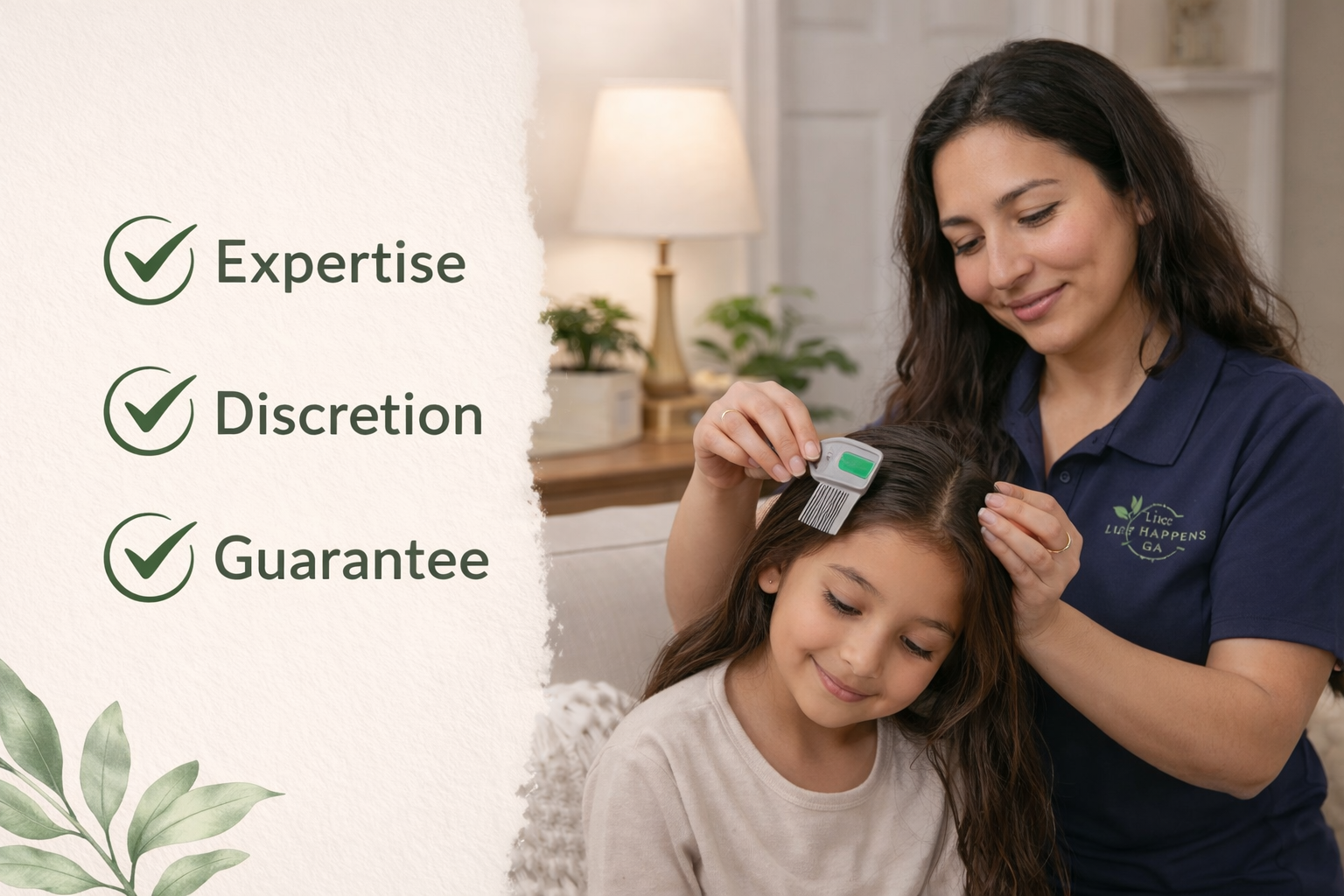
Safe, pesticide-free products function mainly as adjuncts to mechanical removal, helping loosen debris or support combing without relying on neurotoxic chemicals. When used within a clinical protocol, these products enhance the efficiency of manual removal and are selected for gentleness on sensitive scalps and suitability across age groups. The combined approach—thorough comb-out plus safe adjuncts—addresses both visible infestation and comfort concerns for infants, children, and adults. Parents benefit from professional guidance on appropriate product use and timing to complement mechanical removal.
What Are the Health and Safety Benefits of Non-Toxic Lice Treatment?
Reduced chemical exposure: Lowers risk for irritation and systemic effects.
Better for sensitive individuals: Safer for infants and those with skin sensitivities.
Sustainable efficacy: Avoids reliance on pesticides that may have resistance issues.
These health and safety advantages make non-toxic, mechanical-first methods a practical choice for many families concerned about chemical exposure.
*Note: First-visit success rates can vary depending on infestation severity, adherence to protocol, and household factors; reported rates around 90-95% are consistent with industry standards for professional manual removal services.

Facebook
LinkedIn
Instagram
TikTok