
What Happens When Your Child Gets Lice? - Expert Insights
What Happens When Child Gets Lice: What Happens When a Child Gets Lice
Head lice infestation causes an itchy scalp as tiny insects feed close to the skin, most often in children ages 3 to 11. Lice spread through direct head-to-head contact, not dirty hair or hairspray. Certified specialists identify live lice and nits near the scalp, then apply science-based removal methods with a proven, evidence-backed success rate.
Key Takeaways
Head lice cause itching as the primary health concern and do not transmit diseases to children.
Lice Happens GA has treated over 10,000 families since 2015 with transparent, apartment-rate pricing.
Parents treat head lice using over-the-counter or prescription medications following all provided instructions carefully.
Check all household members and close contacts for active lice infestations immediately after discovery.
What Happens When Child Gets Lice?
Head lice settle close to the scalp, feed on tiny amounts of blood, and pass from one child to another through direct hair-to-hair contact. Understanding what happens when child gets lice starts with a simple fact: these insects are a common problem for school-age kids, and they spread easily from person to person. Left unaddressed, an infestation moves quickly through a classroom, a sports team, or a sleepover group before anyone notices a single itch.
Lice don't jump, swim, or fly. They crawl. That distinction matters, because it means transmission almost always requires close, sustained head contact. Not shared hats or hairbrushes alone. A child sharing a pillow during a movie night or leaning in for a group photo faces far more risk than one who sits near a classmate.
Is it normal to feel panicked after finding lice?
Discovering lice on a child's head is unsettling, and that reaction is completely normal. Panic, however, tends to lead to rushed decisions, wasted products, and unnecessary stress for the whole household.
How fast should a family respond?
Quick action limits spread but doesn't require frantic measures. A calm, methodical check of the scalp and hairline, followed by a same-day treatment plan, keeps one case from becoming a family-wide outbreak.
Lice Happens GA has guided over 10,000 families since 2015, emphasizing that lice are treatable and manageable with the right steps.
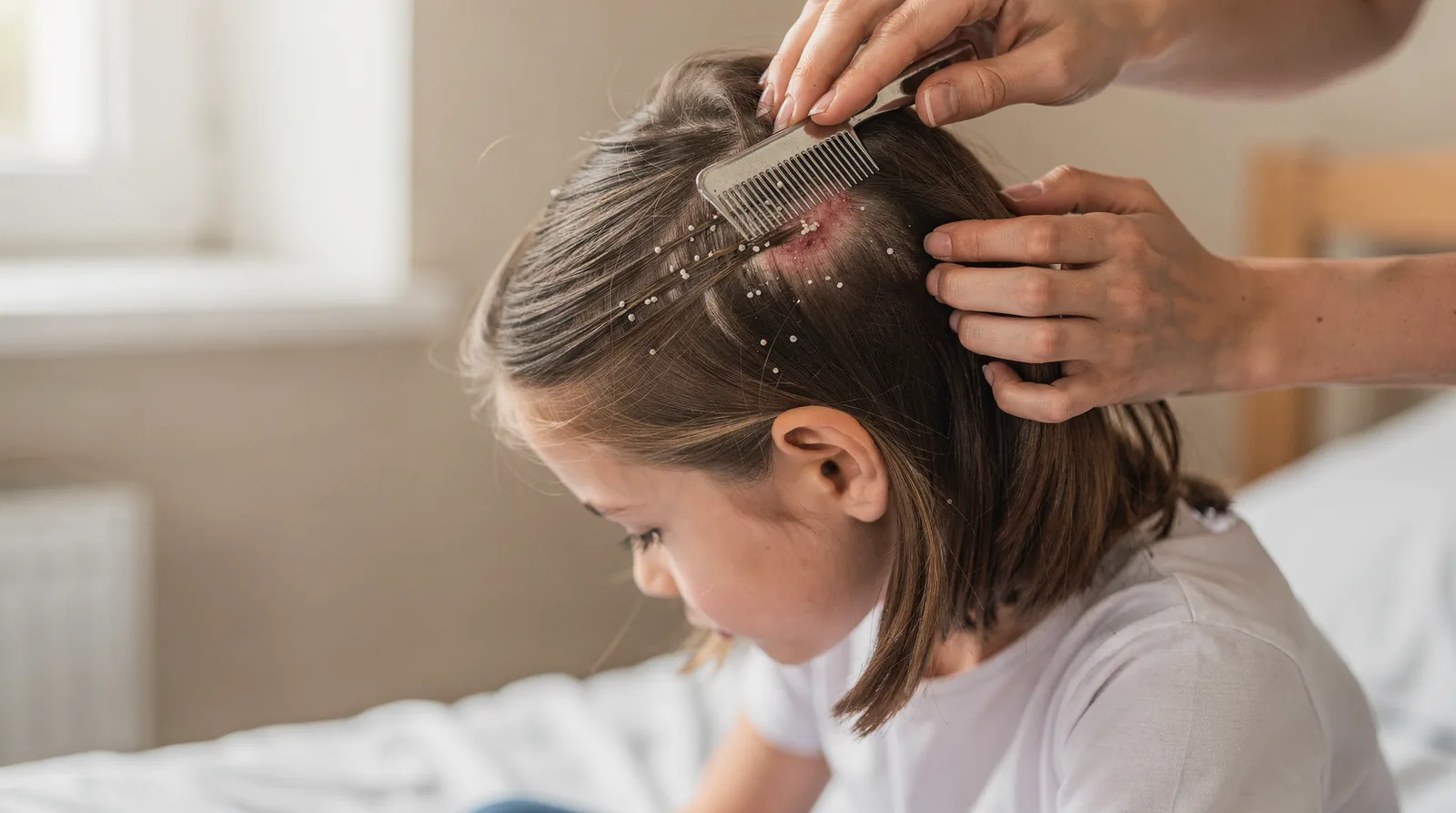
Lice bites cause an itchy, irritated scalp, and scratching can lead to infection; Nits appear
What Are Head Lice Symptoms in Children?
Two signs stand out: relentless scalp itching and tiny specks clinging to the hair. Head lice symptoms in children rarely stay hidden for long, since bites irritate the scalp and provoke constant scratching. Left unaddressed, that scratching opens the door to skin infection, turning a manageable nuisance into a bigger medical concern.
Parents watching for what happens when child gets lice should focus on two physical clues. First, an itchy, irritated scalp that doesn't ease up, especially behind the ears and at the neckline. Second, small dots attached firmly to individual hair strands rather than resting loosely on top.
What do nits look like on a child's hair?
Nits appear as tiny yellow, tan, or brown dots before they hatch. Lice glue them to hair shafts close to the scalp, where body heat keeps eggs warm until hatching. Unlike dandruff, nits do not brush away easily.
How can parents confirm it's lice?
Visual symptoms offer strong clues, but certainty requires a closer look. Lice Happens GA provides professional head lice screening to confirm or rule out an active infestation, sparing families the guesswork of self-diagnosis. A screening fee applies, and that fee is waived whenever treatment happens during the same visit.
Symptoms to Watch For:
Persistent scalp itching, particularly behind the ears and near the neckline
Redness or irritation from scratching
Small yellow, tan, or brown dots fixed to hair shafts
Visible crawling insects near the scalp in more advanced cases
Catching these signs early matters. Prompt screening protects the whole household from a fast-spreading infestation and keeps a minor irritation from becoming a lingering problem.
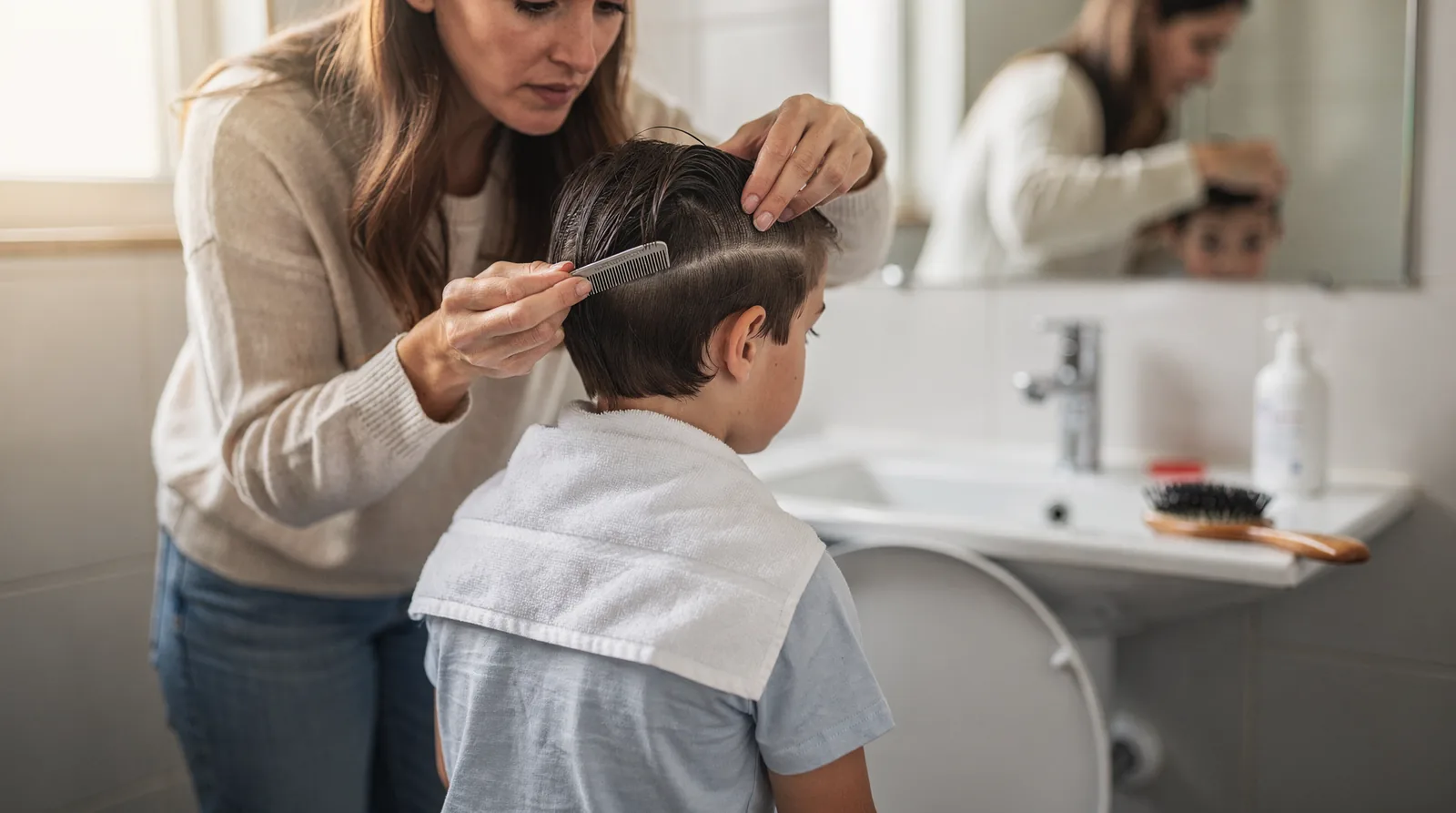
Check all household members and other close contacts for lice once one child is confirmed
What to Do When Child Gets Lice?
A confirmed case calls for immediate household screening, not panic. Recognizing what happens when child gets lice helps parents act quickly instead of guessing. Common head lice symptoms in children include scalp itching, visible nits near the ear line, and restless scratching at night.
Once a diagnosis is confirmed, what to do when child gets lice starts with checking every household member and close contact for lice. Siblings, parents, and anyone who shares a bed need a scalp check that same day. Skipping this step often leads to reinfestation within weeks.
Should everyone be treated at the same time?
Yes. Every infested household member, along with anyone sharing a bed with the child, needs treatment simultaneously. Treating one child while leaving an infested sibling untreated restarts the cycle. Pets do not carry or spread lice, so family animals need no treatment.
What does professional treatment look like?
Families searching for mobile lice removal Atlanta providers can skip the guesswork of store-bought kits and repeated pharmacy runs. Lice Happens GA brings the child head lice treatment process directly into the home, checking and treating the whole household in a single visit.
Pricing clarity matters when stress is already high:
Transparent, apartment-rate pricing for in-home treatment, with no surprise charges after the visit
HSA and FSA payment accepted, easing the financial burden of same-day care
This structure reflects the company's core mission: compassionate, judgment-free care for every family, delivered without hidden fees or shame. Parents move from a confirmed case to a lice-free household in one coordinated visit, rather than juggling separate appointments for each family member.

Lice Happens GA provides mobile lice removal alongside professional screening in one visit; Short hair
What Does the Treatment Process Involve?
A single visit combines professional screening with full treatment, eliminating the guesswork that sends parents chasing conflicting advice online. Lice Happens GA delivers mobile lice removal Atlanta families trust, pairing a certified screening with same-day removal at the kitchen table or on the back porch. No separate diagnostic appointment. No waiting room.
The child head lice treatment process starts with a scalp check under bright light, section by section, to confirm an active infestation before any product touches the hair. Pricing stays straightforward: transparent, apartment-rate pricing is based on hair length, so families know the cost before treatment even begins. Families know the cost before treatment begins, not after.
How long does a lice treatment appointment take?
Appointment length depends on hair length and infestation severity, though the combined screening-and-removal format keeps visits efficient. Technicians work section by section, checking their progress against clear benchmarks rather than rushing through strands.
Will my child need a second treatment?
Some treatments kill both live lice and their eggs, meaning retreatment usually isn't necessary. Other lice medications only kill the live insects and leave eggs intact, which does require a follow-up round. A specialist explains which category applies before treatment starts, so parents aren't left guessing weeks later.
Every method traces back to the company's founding by a registered nurse, which grounds the process in clinical judgment rather than guesswork. That clinical foundation shapes the company's core mission: treating every family with clear communication, evidence-based methods, and judgment-free care from the first phone call to the final scalp check.
FAQ
Do head lice spread diseases to children?
No. Itching is the primary health concern with head lice, and the insects do not transmit diseases. Left untreated, however, constant scratching can lead to skin infection on the scalp.
How do lice actually spread between kids?
Lice crawl rather than jump, swim, or fly, so they spread mainly through direct head-to-head contact. Sharing pillows during movie nights or leaning in for group photos poses far more risk than sitting nearby.
How can a parent confirm it's lice?
Visual clues like scalp itching and nits offer strong hints, but certainty requires a closer look. Lice Happens GA provides professional head lice screening to confirm or rule out an active infestation.
Conclusion
In closing, discovering lice in your child's hair understandably triggers stress, but it's a manageable, treatable condition—not a reflection of your parenting or your home's cleanliness. Lice Happens GA operates on a simple promise: No Shame, No Blame. With prompt action and evidence-based treatment, most families resolve lice infestations completely. Our certified specialists stand ready to guide you through the process with compassion and expertise, helping your family move forward confidently.

Facebook
LinkedIn
Instagram
TikTok