Marietta, GA In-Home Lice Removal Services
Marietta, GA In-Home Lice Removal Services: Professional, Non-Toxic Treatment for Families

In Marietta, professional in-home lice removal provides discreet, non-toxic treatment that removes lice and nits while minimizing stress for families. This article explains why in-home, mobile lice services can be more effective and less disruptive than DIY or store-bought options, and it outlines what to expect from a professional non-toxic comb-out process. Parents will learn the primary benefits of at-home treatment, how a chemical-free multi-step protocol works, what transparent pricing typically looks like, and which outcomes and guarantees matter when choosing a provider. Many families face time pressures, school notifications, and the uncertainty of repeated home treatments; this guide shows how a structured, manual comb-out approach addresses those pain points. The sections that follow cover benefits and privacy, a practical six-step non-toxic process (with a clear procedural table), transparent pricing examples and payment options, and social proof that explains success rates and guarantees. Throughout, the focus is practical: how in-home lice removal works, why it often outperforms DIY attempts, and how to evaluate value for a Marietta family.
What Are the Benefits of Choosing In-Home Lice Removal in Marietta?
In-home lice removal places professional treatment where families already are, combining clinical technique with the convenience of staying at home. The mechanism is simple: trained technicians perform full-family head checks and a targeted manual comb-out using non-toxic products, which reduces repeat treatments and limits exposure to ineffective over-the-counter chemicals. The primary benefit is time savings and reduced stress for children and caregivers, since treatment avoids clinic waiting rooms and shortens the path to lice-free results. Knowing these practical advantages helps parents decide between at-home professional care and repeated DIY attempts.
Lice Happens provides one local example of these benefits through mobile, concierge-style visits that emphasize discretion, non-toxic methods, and full-family screening. Their model shows how a provider can combine convenience with education so families leave confident about prevention and follow-up. Mentioning a local option illustrates how in-home services typically operate without endorsing a single choice for every family. Families should compare scheduling flexibility, technician training, and follow-up policies when evaluating any Marietta provider.
Lice removal from home offers several measurable advantages for households managing an active infestation:
Faster relief through focused manual comb-out in a single visit for multiple family members.
Greater privacy and reduced social stigma compared with clinic or school-based detection.
Reduced chemical exposure because non-toxic enzyme and combing methods replace pesticides.
Better follow-up and education so parents can complete any at-home combing plan correctly.
These benefits translate to shorter disruption of daily routines and fewer missed school days, which is why many parents prefer a professional in-home approach.
How Does Mobile Lice Removal Provide Convenience and Privacy?

Mobile lice removal delivers convenience by bringing trained technicians and tools directly to the home, allowing parents to schedule around school or work and avoid travel logistics. The core mechanism is on-site family screening and sequential manual comb-out; technicians can screen every household member in one visit, which shortens overall treatment time and eliminates multiple appointments. Privacy is preserved because treatment occurs in a private setting, which reduces embarrassment for children and prevents public exposure at clinics. This combination of logistical ease and confidentiality helps families manage outbreaks with minimal social impact and faster resolution.
Technicians often follow a predictable workflow—arrival, head checks for all household members, targeted treatment sequence, and education on prevention—so parents know what to expect. That predictable structure reduces anxiety and improves adherence to any follow-up combing plan, which in turn increases the likelihood of a successful outcome and lowers the chance of re-infestation.
Why Is Discreet Treatment Important for Marietta Families?
Discreet in-home treatment protects children from stigma and reduces classroom disruption, because families can address infestations privately and return children to normal routines faster. The reason this matters is that social consequences—embarrassment, teasing, or exclusion—can prolong stress and complicate school communications; private treatment limits those secondary harms. Providers who prioritize confidentiality also tend to include communication strategies for schools and caregivers, offering neutral language and documentation when needed. Reducing public exposure also removes one barrier that keeps families from seeking timely, professional help.
When families feel their privacy is respected they are more likely to complete recommended follow-up combing and prevention steps, which directly affects success rates. That link between discretion, adherence, and outcomes is why confidentiality practices are an important selection criterion for any Marietta lice service.
How Does Lice Happens' Non-Toxic 6-Step Lice Removal Process Work?

The non-toxic 6-step process is a manual, evidence-based comb-out protocol designed to remove lice and eggs without pesticides; it combines enzymatic soaking, systematic de-bulking, and repeated combing to physically eliminate live lice and nits. This mechanism relies on mechanical removal as the primary mode of action rather than chemistry, which reduces chemical exposure and targets both adults and immature stages. The result is a thorough, family-wide approach that includes screening, education, and a clearly defined follow-up combing plan to prevent recurrence. Presenting the process step-by-step helps parents understand time expectations and why manual techniques often succeed where single OTC treatments fail.
Below is a concise procedural summary of the six steps used in a chemical-free comb-out approach:
Soak: Apply non-toxic enzyme-based product to loosen debris and nits.
Initial de-bulk: Remove loosened matting and large clumps to expose hair.
Sub-section: Divide hair into small sections for systematic treatment.
Cross sectioning: Use fine-tooth combing across subsections to catch nits.
Re-comb: Repeat combing cycles until no live lice are found.
Nymph re-check: Schedule or perform a re-check to detect any immature lice.
This numbered approach clarifies why multiple passes and sectioning are critical to capture hidden nits and ensure a complete comb-out before concluding a visit.
The following table maps each procedural step to what happens and the expected outcome, making it easier for parents to follow a HowTo-style workflow.
StepAttribute (what happens)Benefit/OutcomeSoakEnzyme-based, non-toxic applicationLoosens debris and weakens egg attachment for easier removalInitial de-bulkRemove tangles and excess buildupShortens combing time and exposes hair shaftsSub-sectionWork in small, controlled hair segmentsEnsures consistent coverage and reduces missed areasCross sectioningSystematic fine-tooth comb passesCaptures nits and live lice from every angleRe-combMultiple comb cycles per sectionConfirms removal of mobile lice and remaining eggsNymph re-checkFollow-up inspection after treatmentDetects immature lice and triggers additional combing if needed
This table shows how each action produces a measurable outcome that contributes to a complete, chemical-free removal process. Proper sequencing and repetition are essential to the method’s effectiveness.
What Are the Key Steps in the Chemical-Free Treatment?
Key steps in chemical-free treatment combine enzymatic soaking with manual precision to remove lice and eggs without insecticides. The reason this works is that loosening agents reduce adhesion of nits, while mechanical combing removes both live lice and detached eggs. In practice, a typical visit includes systematic sectioning and repeated combing cycles until technicians find no live lice, with clear time expectations provided to the family. Parents should expect technician-led education on home follow-up combing that supports the initial in-home removal.
Technicians also advise on laundering or isolating certain items as part of prevention, but the primary outcome depends on consistent, thorough combing during and after the visit. That emphasis on manual removal explains higher first-visit success when compared to single OTC applications.
How Does RN-Founded Expertise Ensure Effective Results?
RN-founded oversight brings clinical protocols, infection-control thinking, and standardized training into a lice removal program, which improves consistency and safety. Registered nurse leadership typically informs technician training, screening standards, and clinical decision-making for complex or persistent infestations. The practical benefit is that medically informed protocols prioritize both effective removal and family education, helping caregivers complete the required 14-day combing plan that supports guarantees. RN involvement also supports clear escalation pathways if follow-up or additional care is needed.
Clinical oversight tends to correlate with measurable quality controls—standardized checklists, documented re-checks, and staff competency assessments—all of which increase the likelihood of successful first-visit outcomes and reinforce client trust.
What Is the Transparent Pricing and Value of Professional Lice Treatment in Marietta?
Transparent pricing helps families compare the value of professional in-home services against repeated DIY attempts by clarifying line items and expected outcomes. The main cost drivers are number of household members treated, severity of infestation, and whether a service includes a separate service fee or flat-rate family pricing. Knowing typical price ranges and what is included helps families make informed choices and plan for potential follow-up combing. Clear pricing also reduces friction at booking and supports use of tax-advantaged accounts when available.
Example pricing elements often seen include head checks and treatment ranges, with providers offering flat-rate options that cover the family:
Service ElementPrice ExampleWhat’s IncludedHead check$30–$40 per headVisual inspection and screening for all household membersTreatment$125–$175 per personFull manual comb-out, non-toxic products, and post-treatment educationFamily flat-rate / Service feeFrom $150 per family; service fee $125–$225On-site visit, technician time, and follow-up guidance; pricing varies by household size
This table gives a transparent snapshot of typical line items and what families should expect to receive for each price element.
How Much Does In-Home Lice Removal Cost in Marietta?
Typical cost ranges reflect head checks, individual treatment, and a service fee; a common presentation is head checks at $30–$40, individual treatments from $125–$175, and family service fees or flat rates that start from $150 per family. The mechanism underlying price variation is technician time and the number of heads treated—the more people screened and combed, the higher total cost, though flat-rate family pricing can create savings for multi-member households. Comparing these figures to the time and expense of repeated OTC attempts often shows professional intervention is more cost-effective for moderate to severe infestations. Families should request an upfront quote that reflects household size and anticipated visit length.
What Payment Options, Including HSA/FSA, Are Accepted?
Understanding payment options helps families use available benefits and reduce out-of-pocket costs. Many professional in-home lice providers accept standard payment methods and also accept HSA/FSA accounts as a tax-advantaged way to cover treatment costs, making services more affordable for families. Using HSA/FSA funds requires retaining receipts and ensuring the service aligns with account rules, but acceptance of these accounts can materially lower effective cost. Clear payment policies and transparent receipts help families use benefits without administrative surprises.
Common accepted payment methods include credit/debit cards and cash.
Many providers accept HSA/FSA payments for eligible medical services.
Providers typically supply detailed receipts that document services for reimbursement or account use.
Accepting HSA/FSA reduces barriers to choosing professional care and often improves follow-through on recommended follow-up combing.
What Do Marietta Families Say About Lice Happens' In-Home Lice Removal?
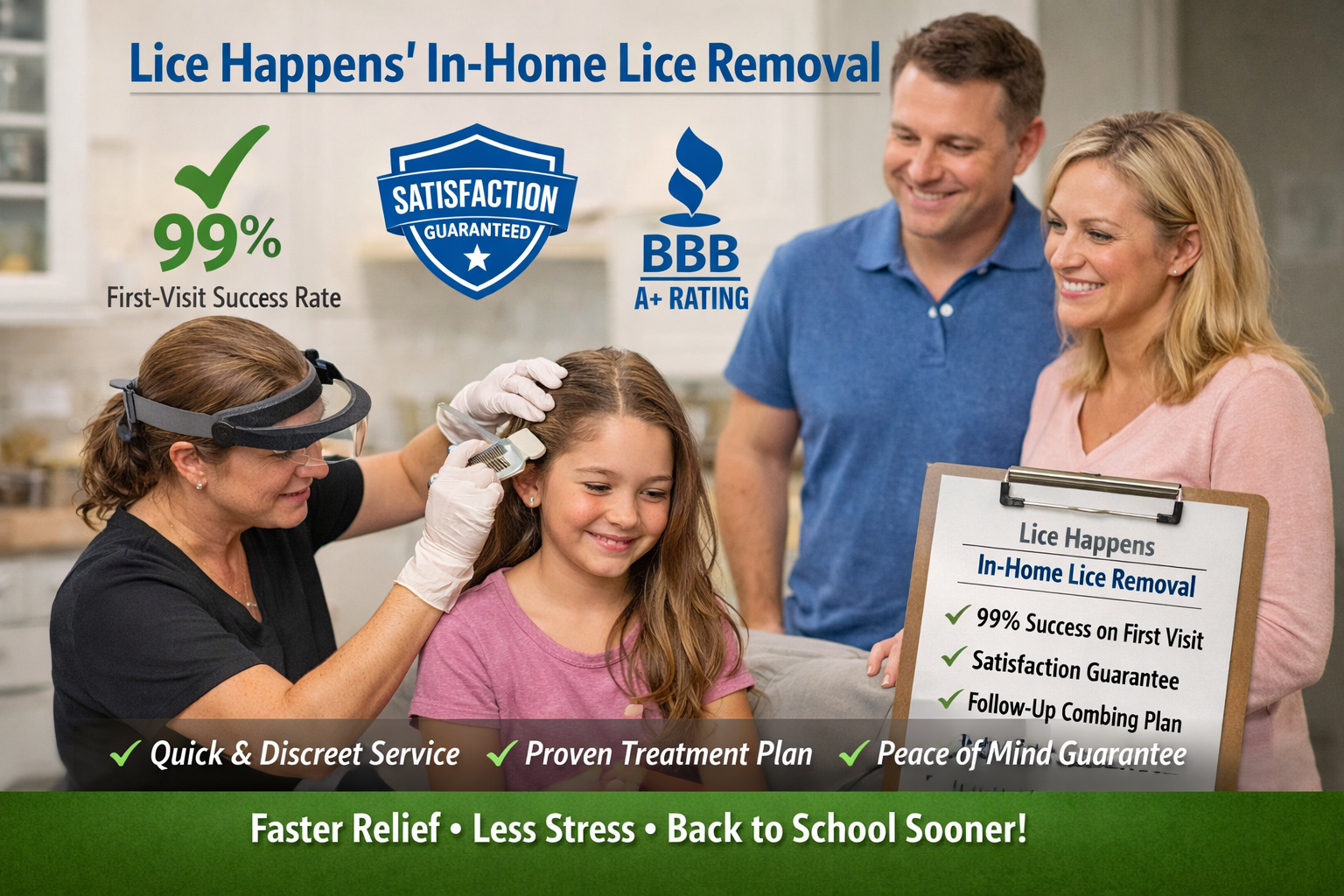
Social proof and measurable trust signals help families assess provider reliability and likely outcomes when researching options. Important indicators include reported success metrics, the presence of guarantees, and clear follow-up requirements that demonstrate accountability. For example, documented first-visit success rates and guarantees tied to a defined combing plan show a provider is tracking and standing behind outcomes. These metrics help parents weigh provider claims against their own priorities for speed, discretion, and safety.
What Are Common Client Success Stories and Testimonials?
Common anonymized outcomes involve families who tried store-bought shampoos without success and found rapid resolution after a single professional comb-out visit. These cases often highlight emotional relief, regained normal routines, and confidence from receiving clear home-care instructions. Parents typically report fewer follow-up calls and quicker returns to school when technicians perform full-family screening and leave a 14-day combing plan. The practical takeaway is that professional in-home treatment reduces repeated effort and uncertainty for families.
How Does Lice Happens Maintain a 95% First-Visit Success Rate?
Maintaining a high first-visit success rate relies on standardized protocols, thorough family screening, and clear follow-up requirements tied to guarantees and re-check policies. RN-informed training, repetition of combing cycles, and strict sectioning techniques reduce missed eggs and immature lice, which explains high documented success metrics. Additionally, requiring adherence to a 14-day combing plan and offering a lice-free guarantee incentivizes thorough at-home follow-up, which supports durable outcomes. These operational controls—training, procedure, and documented follow-up—are the core reasons providers report strong first-visit success.

Facebook
LinkedIn
Instagram
TikTok